Home Dental Care: Dental Tips for Pets, Product Picks, and Maintenance Tricks
Some of the most effective dental tips for pets are surprisingly simple and starting with a toothbrush, a pet-safe toothpaste, and five minutes a few times a week can meaningfully slow the progression of dental disease between professional cleanings. At-home dental care is the essential daily complement to professional veterinary dentistry, and it’s more accessible than most pet owners realize.
Our team at Blackstone Animal Hospital in East Gwillimbury, Ontario has helped countless clients build home dental routines that actually stick. In this blog, we’ll explore what works and why.
Which Toothbrushing Techniques Work Best for “Difficult” Pets?
Toothbrushing is one of the gold standard dental tips for pets, and the most common reason people abandon it is because they try to do too much too soon. A pet that has never experienced brushing will not immediately tolerate a full two-minute session. Patience and incremental progress are the keys to building a sustainable routine.
A Step-by-Step Introduction to Tooth Brushing
Follow this progression, spending several days at each stage before advancing:
- Start with your finger. Let your pet sniff and lick a small amount of pet-safe enzymatic toothpaste from your fingertip. Make it a positive, low-pressure interaction.
- Introduce gentle finger rubbing. Once your pet is comfortable, use your finger to gently rub the outer surfaces of the teeth and gums. This gets them accustomed to the sensation.
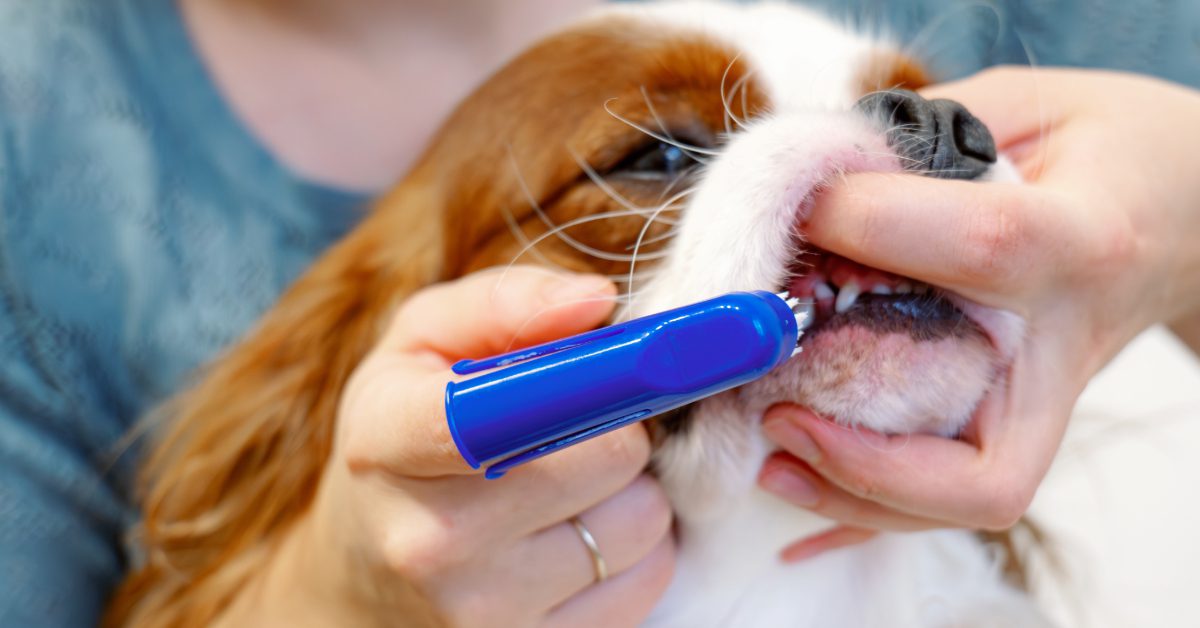
- Transition to a finger brush. Finger brushes fit over your fingertip and offer slightly more surface coverage while remaining familiar and non-threatening.
- Introduce a pet toothbrush. Soft-bristled pet toothbrushes are designed to access the outer surfaces of the teeth at the correct angle. Use gentle, circular motions along the gumline.
- Build duration gradually. A few seconds on each side is a success in the beginning. Work toward 30 to 60 seconds per side over time.
What About Cats?
Cats are often assumed to be impossible to brush, but many accept it quite well when introduced slowly. The key dental tip for cat owners is to work quickly, focus on the outer surfaces (where most disease accumulates), and end every session with something positive. Even three or four gentle strokes on each side provides meaningful benefit.
Human toothpaste is never appropriate for pets. It contains fluoride and xylitol, both of which are toxic to dogs and cats. Use only toothpaste formulated specifically for animals.
Are Water Additives and Dental Wipes Actually Effective Alternatives?
Brushing is the most effective home dental tip for pets, but it is not the only option, and for some animals or owners, alternatives play an important supporting role.
Water additives are liquid solutions added to a pet’s drinking water that help reduce bacterial counts in the mouth. They don’t replace brushing, but they can meaningfully reduce overall bacterial load, particularly on days when brushing isn’t possible. Look for products that carry the Veterinary Oral Health Council (VOHC) seal of acceptance, which indicates the product has been evaluated and found to provide documented dental benefits.
Dental wipes are textured pads used to manually wipe plaque off tooth surfaces. They are easier for some owners to use than a toothbrush, particularly with cats or small dogs who resist traditional brushing. Wipes are less effective than brushing because they cannot access the crevices between teeth or beneath the gumline, but they are far better than no home care at all.
Oral gels and sprays are applied directly to the gum tissue and contain enzymes or antimicrobial agents designed to reduce bacterial activity. They are a reasonable option for animals who will not tolerate any manual contact with their teeth.
The VOHC Seal: What It Means and Why It Matters
The Veterinary Oral Health Council independently evaluates pet dental products and awards its seal only to those that have demonstrated efficacy in controlled studies. When selecting any dental product such as an additive, chew, treat, or toothpaste, looking for the VOHC seal is the most reliable way to identify products with documented benefit. Our team at Blackstone Animal Hospital can point you toward specific VOHC-approved products appropriate for your pet.
How Can You Turn a Stressful Dental Routine Into a Rewarding Bonding Experience?
One of the most underrated dental tips for pet owners is reframing the experience for both you and your companion. The more anxious or rushed you are during a home dental session, the more likely your pet is to resist. Animals are highly sensitive to their owner’s emotional state, and they associate repeated unpleasant experiences with the location, the tools, and the person involved.
Here’s how to make dental care something your pet actually tolerates or even looks forward to:
- Choose a consistent time and place. Routine reduces anxiety. Many pets do better with dental care in the evening when they are naturally calmer.
- Keep sessions short. Five minutes or less is sufficient and far more sustainable than longer, more stressful sessions.
- Use high-value rewards strategically. Offer a small treat, play session, or affection immediately after. Over time, your pet will begin associating dental care with good things.
- Stay calm and narrate gently. A soft, reassuring tone during brushing communicates safety. If you’re tense, your pet knows.
- Never restrain forcefully. Forced restraint during dental care creates lasting negative associations that make every future session harder. If your pet is genuinely distressed, back up a step in the desensitization process.
Which Dental Chews Are Vetted by Veterinary Dental Specialists?
Dental chews are one of the most popular at-home dental tips for pets, and the market is saturated with products making claims that don’t always hold up to scrutiny. The safest approach is to choose only chews and treats that have earned the VOHC seal of acceptance.
VOHC-accepted chews work through the mechanical action of chewing. The physical abrasion against the tooth surface disrupts and removes plaque before it can mineralize into tartar. Some also contain active ingredients such as enzymes or polyphosphates that chemically inhibit tartar formation.
What to Avoid
Not all chews marketed as “dental” actually provide meaningful benefit and some carry real risks:
- Antlers, bones, and very hard chews can fracture teeth, particularly the upper carnassial teeth in dogs. If you cannot indent the chew with your thumbnail, it is too hard.
- Rawhide carries risks related to digestive obstruction and contamination and is not a VOHC-accepted dental product.
- Chews without the VOHC seal may look similar to effective products but have not been evaluated for efficacy.
Our team at Blackstone Animal Hospital recommends discussing dental chew options at your next visit so you can get a specific recommendation based on your pet’s size, chewing style, and dental health history.
Building a Home Care Routine That Complements Professional Care
No home routine fully replaces professional dental cleaning, but consistent home care significantly extends the interval between cleanings, slows disease progression, and makes each professional cleaning less complex. The most effective approach combines:
- Daily or near-daily toothbrushing (even partial sessions count)
- VOHC-accepted dental chews or treats a few times per week
- A water additive on days when brushing isn’t feasible
- Annual or semi-annual professional dental assessments at Blackstone Animal Hospital
Your Pet’s Dental Health Starts at Home
The best dental tips for pets are the ones you’ll actually use consistently and consistency matters far more than perfection. A brief brushing three times per week is better than a thorough session once a month. A water additive every day is better than an elaborate routine that falls apart after two weeks.
Start small, build gradually, and lean on our team at Blackstone Animal Hospital whenever you have questions about products, technique, or your specific pet’s needs. A healthier mouth begins at home, and the effort you put in between professional cleanings is one of the most meaningful things you can do for your companion’s long-term health. Call us at (905) 853-4738 to schedule an appointment with us today.
Recent Posts
About Blackstone Animal Hospital
At Blackstone Animal Hospital in East Gwillimbury, ON, we are independently owned, AAHA-accredited, and Fear Free Certified. We care for dogs and cats with thoughtful medicine and a calm, patient approach.