

The Comprehensive Guide to Pet Dental Health
Good pet dental health is one of the most important and most overlooked aspects of caring for a dog or cat. A truly comprehensive guide to pet dental health covers everything from recognizing a healthy mouth to understanding how dental disease progresses, what professional care involves, and what you can do at home to support your pet’s smile between visits.
At Blackstone Animal Hospital in East Gwillimbury, Ontario, our veterinary team sees firsthand how much of a difference consistent dental care makes in a pet’s overall quality of life. This guide is designed to give you the full picture.
What Does a Truly Healthy Pet Mouth Look Like?
Most pet owners have never been taught what a healthy pet mouth actually looks like, and that’s a problem, because recognizing normal is the first step toward catching abnormal early.
In a healthy mouth, you should see:
- Teeth that are white to off-white with no visible brown or yellow buildup along the gumline
- Gums that are pink and firm; not red, swollen, pale, or bleeding
- Breath that is neutral or mildly “pet-like”; not sharp, sour, or fishy
- No visible cracking, fractures, or missing teeth
- Symmetry on both sides of the jaw with no lumps, bumps, or swelling
What About Puppies and Kittens?
Young animals go through a teething process just like human children. Puppies and kittens lose their baby teeth and grow adult teeth, typically between three and six months of age. During this time, some bleeding and mild discomfort is normal. If retained baby teeth (teeth that didn’t fall out on their own) are present when the adult teeth come in, that’s something your veterinarian at Blackstone Animal Hospital should evaluate promptly, as overcrowding can accelerate the development of dental disease.
Breed Considerations
Brachycephalic breeds, meaning dogs and cats with short, flat faces like Bulldogs, Pugs, Persian cats, and French Bulldogs, are particularly prone to dental crowding because their teeth are compressed into a shorter jaw. These breeds often require more frequent professional dental assessments and diligent home care routines.
Why Is Dental Hygiene Considered the “Secret” to Pet Longevity?
Pet dental health isn’t just about fresh breath or clean-looking teeth. Research consistently links chronic oral disease in pets to significantly shorter lifespans and a reduced quality of life in their later years.
The mouth is the gateway to the entire body. Bacteria that colonize the gums and teeth don’t stay local. They can enter the bloodstream and affect the heart, kidneys, and liver over time. Studies have shown that dogs with untreated periodontal disease are more likely to develop certain cardiac conditions than dogs who receive consistent dental care.
Beyond systemic health, dental disease causes chronic pain. Because animals instinctively hide signs of discomfort, many pets live with significant oral pain for months or years before an owner notices anything is wrong. Addressing pet dental health proactively means your companion is not silently suffering.
The Role of Regular Veterinary Dental Assessments
Annual or semi-annual dental assessments at Blackstone Animal Hospital allow our veterinary team to monitor changes over time, identify early-stage disease before it becomes painful or expensive to treat, and give you personalized recommendations for home care. These assessments are not optional add-ons. They are a foundational component of preventive care.
What Are the Primary Stages of Dental Disease in Dogs and Cats?
Dental disease in pets progresses in four recognized stages, and understanding each one helps you appreciate why early intervention matters so much.
- Stage 1 — Gingivitis: This is the earliest and only fully reversible stage of dental disease. The gums appear mildly inflamed and red along the margin where they meet the teeth. There is plaque present but no bone loss yet. With a professional cleaning and improved home care, the mouth can return to a healthy baseline.
- Stage 2 — Early Periodontitis: The infection has begun to affect the structures supporting the teeth. Up to 25% attachment loss may be present. The gums may bleed when touched, and early bone loss is visible on dental X-rays.
- Stage 3 — Moderate Periodontitis: Between 25% and 50% attachment loss has occurred. Teeth may be mobile. Pain is often present, though pets rarely show obvious signs. Dental X-rays are essential at this stage to determine which teeth may be salvageable.
- Stage 4 — Advanced Periodontitis: More than 50% attachment loss has occurred. Teeth are often non-salvageable and require extraction. At this stage, bacteria have had extensive opportunity to enter the bloodstream, and systemic health risks are elevated.
Why Dental X-Rays Are Non-Negotiable
The majority of each tooth exists below the gumline, completely invisible to the naked eye. Without dental radiographs, your veterinarian can only evaluate approximately 40% of the tooth. Blackstone Animal Hospital uses dental X-rays during professional cleanings to provide a complete picture of your pet’s oral health and to make treatment decisions based on the full structure of each tooth.
How Often Should Your Pet Receive a Professional Dental Assessment?
The general recommendation for most dogs and cats is a professional dental assessment once per year. However, several factors influence how frequently your individual pet needs professional attention:
- Breed: Small breeds and flat-faced breeds typically need more frequent care
- Age: Senior pets are more likely to have advancing disease and benefit from twice-yearly evaluations
- Home care consistency: Pets whose owners brush their teeth regularly tend to progress more slowly between cleanings
- Medical history: Pets with a history of rapid tartar buildup, immune conditions, or systemic disease may need more frequent monitoring
During a dental assessment at Blackstone Animal Hospital, our veterinary team will examine the teeth, gums, tongue, and surrounding oral structures, check for signs of pain or asymmetry, and recommend whether a professional cleaning under anesthesia is needed.
Starting a Dental Routine Your Pet Will Tolerate
Establishing a pet dental health routine early in life makes the process far easier for both the animal and the owner. Kittens and puppies that are introduced to tooth brushing gradually and positively tend to accept it much more readily than adult animals experiencing it for the first time.
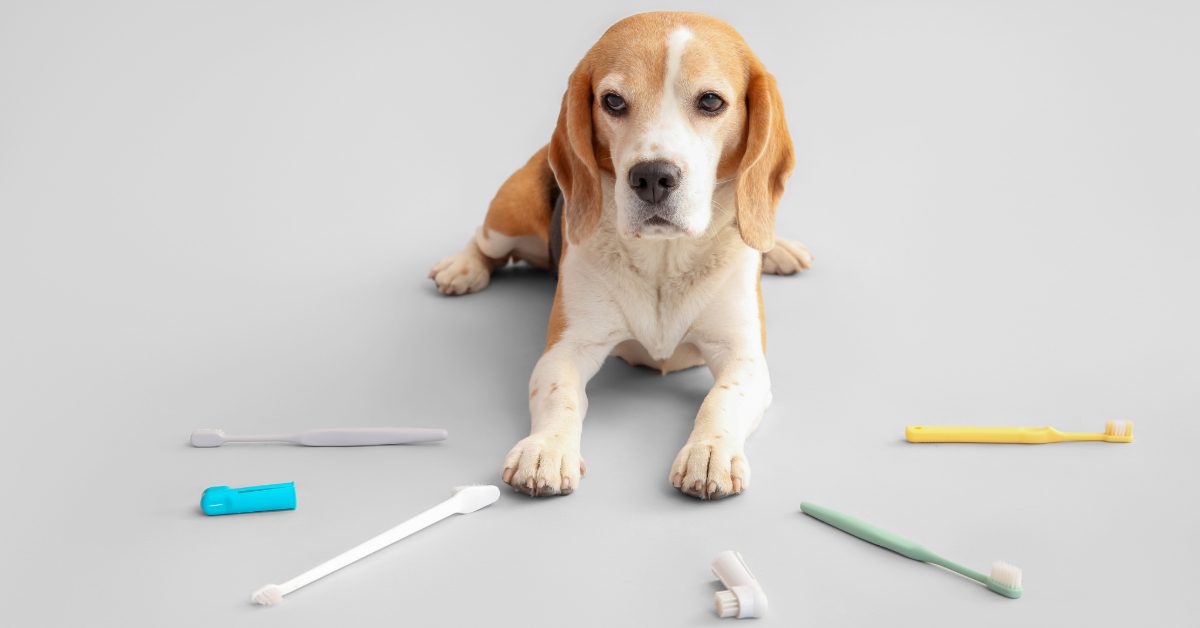
Start by simply allowing your pet to sniff and lick pet-safe enzymatic toothpaste and never human toothpaste, which contains ingredients toxic to animals. Gradually introduce a finger brush, then a pet toothbrush, always keeping the experience short and positive. Even partial brushing on the outer tooth surfaces provides meaningful benefit for pet dental health.
Between professional cleanings, dental chews approved by the Veterinary Oral Health Council (VOHC), water additives, and dental wipes can all contribute to a well-rounded care routine. Ask our team at Blackstone Animal Hospital which products they recommend for your specific pet.
Making Pet Dental Health a Priority Year-Round
Strong pet dental health isn’t a once-a-year concern. It’s an ongoing commitment that pays dividends in longer, healthier, more comfortable years with your companion. Whether your pet is a puppy just growing their adult teeth or a senior dog managing early-stage periodontal disease, there is always something meaningful you can do to support their oral health.
Our team at Blackstone Animal Hospital is here to help you navigate every stage of your pet’s dental journey. Call us at (905) 853-4738 to schedule a dental assessment today and take the first step toward a healthier mouth and a healthier animal overall.
Recent Posts
About Blackstone Animal Hospital
At Blackstone Animal Hospital in East Gwillimbury, ON, we are independently owned, AAHA-accredited, and Fear Free Certified. We care for dogs and cats with thoughtful medicine and a calm, patient approach.