Why Does My Pet Need a Professional Cleaning If I Brush Their Teeth?
Even if you brush your pet’s teeth regularly, professional dental cleaning for pets addresses problems that a toothbrush simply cannot reach, particularly bacteria and tartar buildup beneath the gumline, which is where the most damaging dental disease originates. Home care is valuable and highly encouraged, but it is not a substitute for professional veterinary dental cleaning. Below, we’ll thoroughly discuss why your pet needs a professional teeth cleaning as well as consistent at home care.
Can a Toothbrush Reach the Bacteria Hiding Beneath the Gumline?
The short answer is no. A toothbrush, even one used correctly and consistently, can only clean the visible surfaces of the teeth. The gingival sulcus, the narrow space between the tooth and the gum tissue, is where the most harmful bacteria accumulate, and it is completely inaccessible to home brushing.
This is not a limitation of technique or effort. It is a structural reality. Professional dental cleaning for pets involves specialized instruments that are specifically designed to access, disrupt, and remove bacterial biofilm from within the sulcus itself. No home care product accomplishes this.
Why Subgingival Bacteria Are So Dangerous
The bacteria that colonize beneath the gumline are anaerobic. They thrive in the oxygen-depleted environment deep in the sulcus. These bacterial communities produce toxins that directly damage the connective tissue and bone that anchor the teeth. Over time, this leads to periodontal disease, tooth loss, and systemic inflammation that can affect the heart, kidneys, and liver.
Brushing the visible surfaces of the teeth helps slow the accumulation of bacteria above the gumline, which is genuinely useful, but it does not address what is happening in the subgingival environment. That requires professional intervention.
What Is the Difference Between Surface Plaque and Hardened Tartar?
Plaque is a soft, sticky film of bacteria that begins forming on tooth surfaces within hours of eating. In its early stage, plaque can be disrupted by brushing. This is precisely why daily tooth brushing is so valuable: it prevents plaque from progressing.
Tartar (also called calculus) forms when plaque mineralizes, typically within 24 to 72 hours of accumulation. Once tartar has hardened onto the tooth surface, it is no longer removable by brushing. It bonds to the enamel and becomes a rough, porous surface that attracts even more bacteria, compounding the problem over time.
Why Tartar Cannot Be Safely Removed at Home
Some pet owners attempt to scrape tartar from their pet’s teeth using human dental tools or products marketed for home use. This is not recommended. Unsupervised scraping can scratch and damage the enamel, creating microscopic grooves that accelerate bacterial accumulation. It also does nothing for subgingival tartar, which is where the most damaging deposits form.
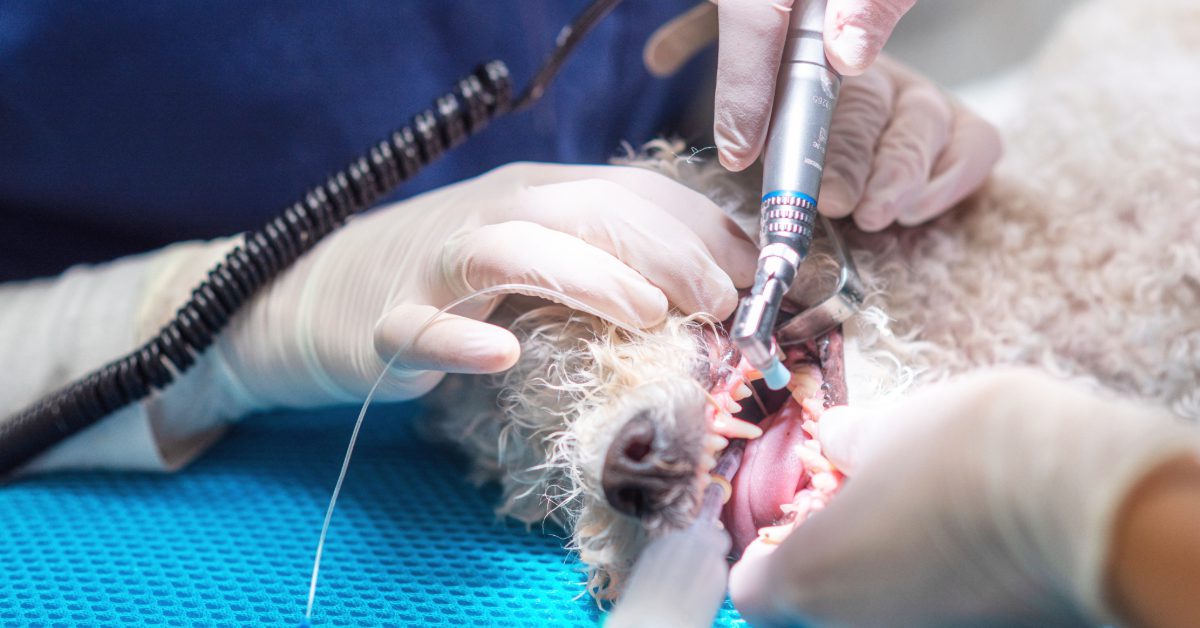
Professional dental cleaning for pets uses ultrasonic scaling equipment calibrated to safely and efficiently break down tartar both above and below the gumline, followed by polishing to smooth the tooth surfaces and minimize future buildup.
How Do Veterinarians Clean Areas That Are Physically Impossible for Owners to Reach?
During a professional dental cleaning at Blackstone Animal Hospital, our veterinary team uses a combination of specialized instruments to access areas that are simply beyond the reach of any home care routine.
The process typically includes:
- Supragingival scaling — removal of plaque and tartar from visible tooth surfaces using ultrasonic and hand scalers
- Subgingival scaling and root planing — careful cleaning beneath the gumline to remove deposits from within the gingival sulcus and root surfaces
- Periodontal probing — measurement of pocket depth around each tooth to identify areas of attachment loss
- Dental radiography — full-mouth X-rays to evaluate the roots, surrounding bone, and structures beneath the gumline
- Polishing — smoothing of all tooth surfaces to minimize future plaque adhesion
This level of care requires precision, the right instruments, and a patient who is completely still, which brings us to the next important question.
Why Is Anesthesia a Necessary Component of a Deep Clinical Cleaning?
Anesthesia-free dental cleanings have been marketed to pet owners as a safer or more convenient alternative to professional veterinary dental cleaning under anesthesia. The veterinary dental community, including the American Veterinary Dental College, is clear on this point: anesthesia-free cleanings are not a substitute for proper professional dental care, and they may give owners a false sense of security.
Here is why anesthesia is essential for a thorough professional dental cleaning for pets:
- Subgingival cleaning requires precision. Instruments must be safely inserted beneath the gumline while the patient is completely still. Any movement creates risk of tissue injury.
- Dental X-rays require stillness. Full-mouth radiographs cannot be obtained from a conscious, moving animal.
- Pets experience pain during scaling. Even without visible disease, the vibration and pressure of ultrasonic scaling is uncomfortable. Anesthesia ensures the experience is not distressing.
- All surfaces must be accessible. A conscious animal will not allow a thorough examination of the inner surfaces of every tooth, the back molars, or inflamed and painful areas.
Is Anesthesia Safe for My Pet?
This is a completely understandable concern, and one the team at Blackstone Animal Hospital takes seriously. Modern veterinary anesthesia is exceptionally safe when administered by trained professionals following appropriate pre-anesthetic protocols. This includes pre-surgical bloodwork to evaluate organ function, IV catheter placement for fluid support and emergency access, individualized anesthetic protocols, and continuous monitoring throughout the procedure.
The risks of untreated dental disease such as chronic pain, systemic infection, and organ damage far outweigh the minimal risks of a properly managed anesthetic procedure in a healthy or medically optimized patient.
What Happens After a Professional Dental Cleaning?
Recovery from a professional dental cleaning for pets is typically smooth and quick. Most animals are alert and themselves within a few hours of the procedure. Some mild grogginess on the evening of the cleaning is normal and expected.
Our veterinary team at Blackstone Animal Hospital will provide detailed post-procedure instructions, including guidance on:
- When and what to feed your pet immediately after the procedure
- How to resume or begin a home brushing routine
- What signs of discomfort or complications to watch for
- When to schedule the next dental assessment
Why Professional Dental Cleaning Is an Investment, Not an Expense
Professional dental cleaning for pets is one of the most impactful preventive care services available. By addressing subgingival bacteria, removing hardened tartar, and giving our veterinary team a complete picture of your pet’s oral health, a single professional cleaning can prevent months or years of progressive disease and potentially avoid far more costly extractions or treatments down the road.
At Blackstone Animal Hospital, the goal is always to help your pet maintain the healthiest possible mouth for as long as possible. Combining consistent home care with professional dental cleaning is the most effective approach available for achieving that goal. Call our team at (905) 853-4738 to schedule your pet’s next dental assessment.
Recent Posts
About Blackstone Animal Hospital
At Blackstone Animal Hospital in East Gwillimbury, ON, we are independently owned, AAHA-accredited, and Fear Free Certified. We care for dogs and cats with thoughtful medicine and a calm, patient approach.